The Life-Imprints of Lady Zaynab and the Intellectual & Civilizational Guidance of Women
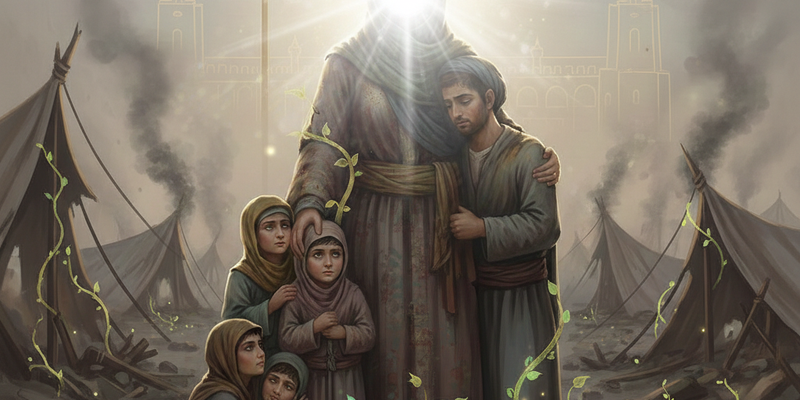
Life does not always move along a smooth, tranquil, and predictable path. In the life of every society, every family, and every individual, there come moments when the palaces of our dreams suddenly collapse, carefully laid plans are undone, and the programming we have devised for tomorrow is swept away by the wind. Everything scatters, supports break, and a person finds themselves standing at a turning point where the road ahead disappears into mist.
Sometimes this moment arrives as the news of an incurable illness; sometimes the economic foundation built through years of effort crumbles in a single blow; and sometimes the very figure who served as the pillar of the household departs from this world. Psychologists describe this condition as the “Zero Point”—the moment when a person feels that everything they possessed, whether material or emotional, has burned to ashes, and they must now begin life anew while seated upon those ashes.
It is precisely in such circumstances that the life-traces left by Lady Zaynab (peace be upon her) offer us an extraordinary and comprehensive model. Lady Zaynab was the eminent woman who, standing at what may be called the “Zero Point” of history in Karbala, not only endured the greatest human, moral, spiritual, and civilizational trial, but transformed it into the eternal triumph of truth. However, this expression is merely for our understanding; in the presence of God, no such “Zero Point” could truly exist in the life of Zaynab (p.b.u.h.).
In this essay, we seek an answer to a question that lives in the hearts of thousands of families today—especially among the women of the Subcontinent: “How does one rise again after being shattered?”
Beyond the Lens of Mourning
Lady Zaynab (p.b.u.h.) is not merely a symbol of grief; she is a teacher of steadfastness. Unfortunately, in many religious gatherings, she is often presented only through the lens of tragedy and oppression, whereas her character is far more expansive, dynamic, and revolutionary. In truth, she represents the most complete embodiment of resilience, composure in crisis, and the reconstruction of life after devastation.
In our society—where women safeguard religious consciousness, the upbringing of children, and the stability of the home while facing social and economic pressures—the life of Zaynab (p.b.u.h.) provides practical guidance through the following principles:
1. Conscious Acceptance
The first response to a major shock is often denial. We are often unwilling to accept that a loved one has passed or that financial support has vanished. Yet, despite a storm of calamities, Lady Zaynab did not surrender to paralysis. On the evening of Ashura—with her family martyred and the tents burning—she acknowledged reality without accepting defeat.
This is Active Acceptance: “I know the circumstances are unbearably painful, yet I am alive—and my responsibilities remain.”
2. Setting Priorities in Crisis
Crisis fractures one’s sense of direction. Lady Zaynab taught us that even in the most severe conditions, one must preserve clarity of priorities. Her first duty was to protect the life of the Imam of the time, Imam Sajjad (p.b.u.h.); her second was to gather and comfort the women and children.
When a provider passes away, a mother’s foremost duty is the psychological protection of her children. The Zaynabi mindset declares: “This is not the moment to merely weep; this is the moment to hold yourself together.”
3. Giving Meaning to Suffering (Meaning Therapy)
Lady Zaynab’s historic words, “I saw nothing but beauty” (Mā ra’aytu illā jamīlā), are not merely a slogan but the summit of spiritual consciousness. Psychologists affirm that a human being can endure any pain provided they can assign meaning to it. She did not see Karbala as a defeat, but as divine pleasure.
- Do not see poverty as humiliation—see it as a trial.
- Do not see divorce as the end of life—see it as a new stage.
- Do not see illness as punishment—see it as purification.
4. Dignity, Not Victimhood
In hardship, many begin to see themselves as victims. Yet, Lady Zaynab, even in captivity, did not abandon her dignity. In the court of Yazid, her address sounded not like a captive, but like a sovereign. Her message to modern women is clear:
- Becoming a widow is not weakness.
- Becoming a single mother is not a shame.
- Being struck by circumstances does not mean losing one’s identity.
5. Becoming a Support for Others
Lady Zaynab bore the deepest wounds, yet she held the children together and cared for the ill. Research shows that helping others reduces one's own grief. Families that respond to tragedy by blaming one another fall apart; those that support one another grow stronger.
Conclusion: The Zero Point is a New Beginning
The life of Lady Zaynab (p.b.u.h.) is not the story of a defeated woman; it is the miraculous conclusion of a leader who crossed oceans of crisis to arrive at the shores of honor.
The Zero Point is not the final line—it is a new beginning. If Zaynab (p.b.u.h.) could raise the banner of eternal victory from the ashes of burned tents, then we, too, can build a new life from the ruins of our circumstances—provided we adopt patience, trust in God, and Zaynabi wisdom as our way of life.

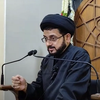
Maulana Najeebul Hasan Zaidi
Maulana Najeebul Hasan Zaidi is an Islamic scholar from Mumbai - India, who holds a PhD in Islamic studies. He has knack for excellent oratory and brilliance in writing. Apart from other accolades he is more prominently known for Ashra-e-Awwal sermons from Mughal Masjid, Mumbai