
 History
Lady Fatima al-Zahra (SA): Her Infallibility and the Case of Fadak P1
01
Your trusted source for Islamic teachings, history, and spiritual guidance
History History
 History
 Children
 History
 Seerat e Masoomeen
 Seerat e Masoomeen
 Children
 Miscellaneous
 History
 Miscellaneous
 Miscellaneous
Ranked by reader loves
 Seerat e MasoomeenMost loved
Lady Fatimah al-Zahra (peace be upon her), the beloved daughter of the Prophet Muhammad (peace be upon him and his progeny), was created from the Divine Light long before the creation of Adam. Her purity, strength, and virtues reflect those of the Prophet himself, except for prophethood. Allah chose her as the sacred vessel to carry and protect the light of Wilayah (Divine Guardianship). Through her immense sacrifice, she preserved Prophethood, Imamate, and the Oneness of Allah (Tawheed), ensuring that the true message of Islam remained alive for all generations.
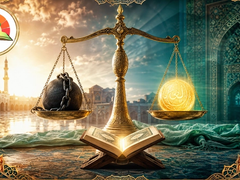

In Islamic thought, leadership is a sacred trust grounded in piety, scholarly competence, mutual consultation, and accountability rather than power or lineage. Applying these criteria established by the Quran and Ahl al-Bayt, the text examines Ayatollah Sayyid Mojtaba Khamenei's leadership amid severe geopolitical and economic challenges. It emphasizes that a leader's true strength lies in instilling national unity and public trust during crises. Ultimately, leadership must be judged by principles over personality and character over renown.

The essay presents the Prophet Muhammad (PBUH) as the ultimate embodiment of mercy, justice, and sublime moral character whose revolution transformed the human soul from within. Rather than conquering through mere political force, he redefined human worth by moral integrity and piety rather than lineage or status. His life (Seerah) serves as an enduring, practical standard for living with truthfulness, compassion, and fairness. Ultimately, genuine devotion to him is measured not simply by verbal praise or ritual, but by embodying his exemplary ethics in daily conduct.
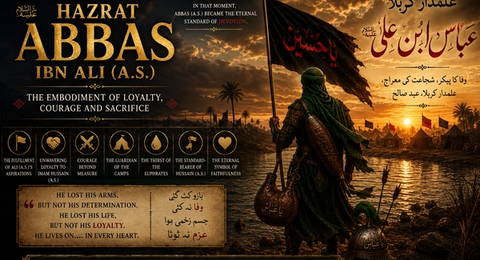
Hazrat Abbas ibn Ali (A.S.), the standard-bearer of Karbala, remains the greatest symbol of loyalty, courage, and selflessness in Islamic history. Despite reaching the waters of the Euphrates after days of thirst, he refused to drink before Imam Hussain (A.S.) and the thirsty children of the camp. His unwavering devotion, unmatched bravery, and ultimate sacrifice transformed him into an eternal example of faithfulness and obedience. Even today, his name inspires hearts with the values of honor, sacrifice, and loyalty to truth.
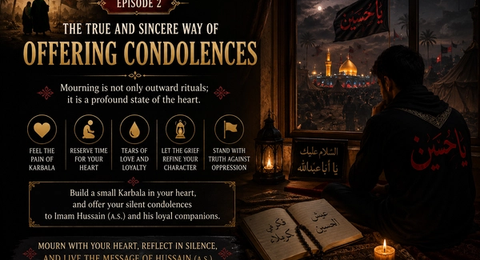
This article highlights that true mourning is not limited to gatherings, processions, and rituals; it is a deep connection of the heart with the tragedy of Karbala. By reflecting on the sacrifices of Imam Hussain (A.S.) and his companions in moments of sincere solitude, believers can strengthen their faith, awaken their conscience, and draw closer to the true spirit of Azadari. True condolences are offered not only through words and rituals, but through heartfelt remembrance, reflection, and loyalty to the message of Karbala.
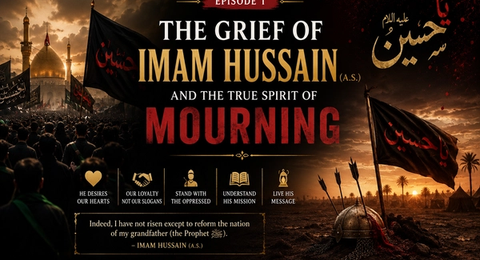
This article explores the true purpose of mourning Imam Hussain (A.S.). It reminds us that Azadari is not only about tears, processions, and rituals, but also about understanding and following the values of Karbala—truth, justice, sacrifice, and standing with the oppressed. True love for Imam Hussain (A.S.) is reflected not only in our mourning but also in our character and actions.
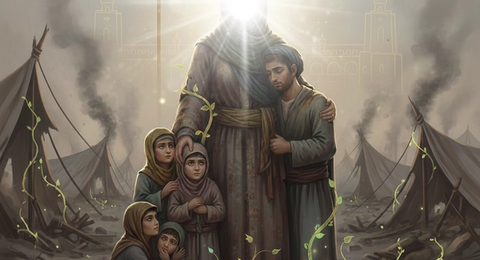
This essay explores the concept of the "Zero Point"—the moment of total devastation—and presents Lady Zaynab (p.b.u.h.) as the ultimate model for rising again through resilience and spiritual clarity. By analyzing her actions after the tragedy of Karbala, the author identifies five core principles: conscious acceptance of reality, maintaining priorities during crisis, finding divine meaning in suffering, preserving personal dignity, and supporting others despite one's own grief. Ultimately, it teaches that the "Zero Point" is not a final end, but a powerful new beginning for those who adopt a "Zaynabi" mindset of steadfastness and trust in God.

Muslim history reveals a sharp divergence between the corrupting pursuit of political power and the moral path of the Thaqalayn (the Qur'an and the Prophet’s Ahl al-Bayt). While empires routinely weaponized religion to justify tyranny, bloodshed, and conquest, the Ahl al-Bayt and their adherents chose sacrifice, justice, and spiritual steadfastness over worldly compromise—exemplified by Karbala. In the modern era, post-1979 Iran is presented as an ongoing test of whether a nation can maintain this ideological resistance and sovereignty against foreign dominance. Ultimately, history measures greatness not by transient authority or conquered lands, but by where one stood when confronting injustice.

Imam Hasan al-Askari (peace be upon him), the eleventh Shia Imam and father of Imam al-Mahdi (peace be upon him), spent most of his life under strict Abbasid house arrest in Samarra. Despite intense political suppression, he preserved religious guidance and community unity by establishing a covert network of trusted deputies (Wikalah). Renowned for his deep scholarly intellect, profound spirituality, and exemplary character, he commanded respect even among his captors and non-Muslims. His ultimate legacy was the discreet safeguarding of his son, ensuring the survival and continuity of the Imamate despite his own martyrdom at a young age.

The article challenges the conflation of Islamic principles with imperial expansion, arguing that the Prophet Muhammad's primary mission was the moral and spiritual transformation of humanity rather than territorial conquest. Drawing directly from the Qur'an, the author emphasizes that authentic victory is rooted in justice, compassion, peace, and voluntary conviction, as demonstrated by the Treaty of Hudaybiyyah and the bloodless entry into Mecca. Consequently, the rapid post-prophetic political expansions should be evaluated as secular historical events rather than inherently sacred acts of faith. Ultimately, the text presents the model of the Ahl al-Bayt, who preserved the essence of Islam through ethical integrity, intellect, and profound personal sacrifice rather than the pursuit of dynastic empire.
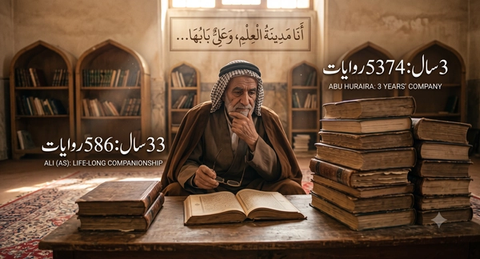
The passage raises a critical inquiry into the substantial numerical gap between hadith attributed to Imam Ali (approximately 586 across roughly 33 years of lifelong companionship) and Abu Huraira (5,374 across three years). Highlighting the prophetic declaration naming Ali as the "Gate of Knowledge," the author argues that such a disparity cannot be dismissed as mere coincidence. Instead, it urges the Muslim world to look beyond the raw numbers and examine the historical and sociopolitical factors that shaped which channels of transmission flourished and which were marginalized.
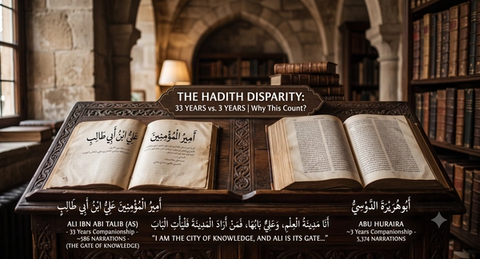
The passage raises a critical inquiry regarding the stark disparity in Hadith transmission within mainstream records. Imam Ali spent roughly 33 years in close companionship with the Prophet yet is attributed only around 586 narrations, whereas Abu Huraira, whose companionship spanned roughly three years, is credited with 5,374. Citing the Prophet’s tradition designating Ali as the "Gate of Knowledge," the text questions whether this discrepancy was mere coincidence. It ultimately urges Muslims to look beyond raw numbers and critically examine the political and historical forces that shaped the preservation and transmission of prophetic knowledge.

Dr. Ali Shariati served as the intellectual catalyst of the Iranian Revolution, transforming Islam into a dynamic, anti-imperialist language of social justice for an alienated, modern generation. While not a traditional jurist or seminary scholar, his charismatic sociology and concept of "Red Shi'ism" awakened critical thought and mobilized mass resistance against the Shah's autocracy. His work, however, was meant to awaken rather than serve as the final theological or institutional authority. The revolution ultimately required Imam Khomeini's political and religious leadership and Ayatollah Motahhari's scholarly rigor to translate that awakened consciousness into a lasting, structured reality.
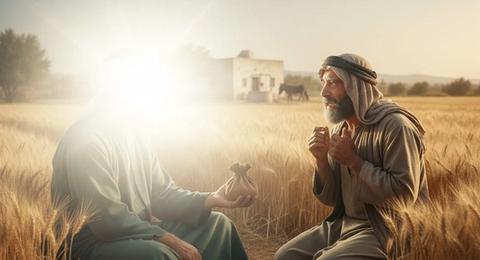
Imam Musa al-Kazim (عليه السلام) was insulted by a man but responded with kindness instead of anger. He visited the man’s farm, offered him money, and prayed for his success. The man was moved by the Imam’s generosity and repented for his behavior. This story teaches us that patience, forgiveness, and kindness can turn enemies into friends.

Just as a year is complete only when all its seasons have passed, a sibling relationship too is complete when it embraces every color, form, and emotion — joy and sorrow, laughter and silence, conflict and comfort. It keeps changing like the seasons, giving us what we need at every stage of life. To accept this bond with all its shades is to discover its true beauty. 🌿

Sometimes, all a person needs is sincerity, compassion, and faith in humanity. Everything else is in Allah’s hands — Who turns a small act of kindness into an ocean of mercy. 💖

Walking on water, flying in the air, or covering the earth — all these are external manifestations. The real miracle is when the human heart comes alive. He who becomes the owner of the heart, in reality, becomes a true human being.

This passage highlights Imam Jafar Sadiq’s (AS) teaching that the loss of scholars means the loss of true knowledge. It stresses that today’s opposition to Marja‘yah by some youth is a grave misfortune, as the survival and dignity of Shia Islam have always depended on the sacrifices and leadership of scholars. In the period of occultation, only the Marja‘s are entrusted with protecting the divine religion and guiding the followers of the Imam (AS) on the true path.
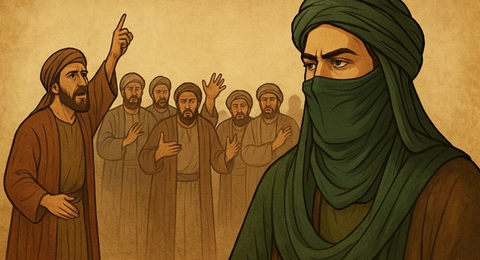
This passage highlights that true loyalty to the Imam (a.s.) is tested when justice is established, as many so-called lovers may oppose him if decisions go against their desires. The example of Kufa shows how people invited Imam Hussain (a.s.) but later betrayed him. Imam Ja’far Sadiq (a.s.) warned that the first opposition to the awaited Imam (a.s.) will come from his own followers. Hence, believers must strengthen religious knowledge and purify actions so they do not become enemies of their awaited savior.
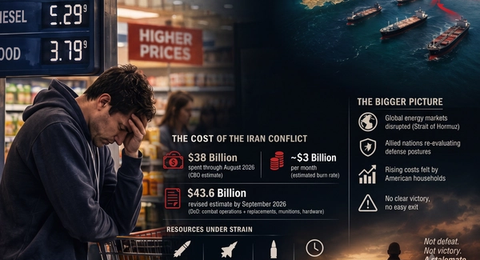
The escalating conflict with Iran has exposed critical limits in American military dominance, costing Washington over $43 billion, draining vital missile stockpiles, and triggering domestic inflation at fuel pumps and grocery stores. Despite suffering heavy attrition, Iran's asymmetric tactics and leverage over the Strait of Hormuz disrupted global energy markets, ensuring the war's financial and economic fallout did not remain one-sided. Donald Trump’s rhetoric urging citizens to bear these rising expenses as a "small price" reflects growing strategic anxiety as Washington struggles to convert sheer firepower into political victory. Caught in an expensive war of attrition with depleted reserves and no clear path to triumph or graceful exit, the U.S. faces a costly stalemate that represents a major political success for Iranian defiance.
Nasibism is an ideological factory of hatred that legitimizes terror, extremism, and the persecution of innocents under a guise of religious sanctity. Driven by a deep-seated malice toward the Prophet and his Progeny (Ahl al-Bayt), it strips the human heart of conscience and transforms violence into an act of twisted devotion. This fanaticism is continually nurtured by radical clerics whose pulpit sermons and biased edicts sanctify bloodshed and justify historical atrocities. While its proponents may change their garb, names, or rhetoric over time, the true essence of Nasibism remains unchanged: unrelenting animosity toward the Ahl al-Bayt and an unyielding defense of tyranny.

This passage contrasts prophetic traditions concerning Yemen and Najd based on narrations from Sahih al-Bukhari and Sahih Muslim. The Prophet Muhammad (peace and blessings be upon him and his family) commended the people of Yemen for their soft-heartedness, declaring faith and wisdom to be Yemeni, while praying for their land and promising them precedence at his Basin. In stark contrast, when requested to bless Najd, he refrained, forewarning that earthquakes, tribulations, and the horn of Satan would arise from there. Overall, the text highlights the historical and spiritual virtue bestowed upon Yemen over Najd through prophetic testimony.

Martyrdom is depicted not as an end, but as an eternal awakening where sacrifice bears witness to enduring conviction. Reflecting on the loss of Sayyid Hassan Nasrallah, the text conveys profound grief alongside the Quranic assurance that martyrs remain alive with their Lord. Though his physical presence and voice are gone, his message and resolve persist in the hearts of the people. Ultimately, his sacrifice poses an enduring challenge to the living: to honor his memory not merely through grief, but through steadfast faith, character, and action.

A sister is not merely a family member, but an irreplaceable emotional anchor and a living archive of shared childhood memories. Scientific studies—including long-term research from Harvard—demonstrate that this close, affectionate bond naturally reduces stress, alleviates anxiety, and accelerates healing after life’s hardships. Unlike other relationships that often fade with time, the love of a sister transcends age and distance, offering an unconditional safe haven where one can be entirely authentic. Having a compassionate sister is an invaluable blessing, providing lifelong comfort that often proves more restorative than any medicine.

Drawing upon accounts in Sahih al-Bukhari and Sahih Muslim, the text examines the Incident of the Pen and Paper (Waqi'at al-Qirtas) to question whether resisting the Prophet’s dying command compromised prophetic sanctity. When the Prophet requested writing materials to record a decree against future deviation, he was met with objections, disputes, and the phrase "yahjur" (speaking deliriously), prompting him to dismiss the attendees in anger. The author contrasts this conduct with strict Qur'anic injunctions requiring absolute obedience and reverence, arguing that elevating personal discretion over a direct prophetic instruction challenges fundamental standards of veneration. Ultimately, the passage calls for an objective, respectful inquiry into whether such actions constituted a grave breach of etiquette, free from partisan bias.
Lives and teachings of the Infallibles AS
Islamic history and historical events
Character building and self-improvement
Various Islamic topics and discussions
Social Islamic teachings and community building
Understanding and interpretation of the Quran
Scholars' answers to religious questions
Traditions and sayings of Masoomeen AS
Life problems and Islamic solutions
Guidance for children، parenting & upbringing
Religious matters and recommended solutions
Women in Islam and their duties and rights
Islamic poetry and literary works
Announcement
We invite Shia writers, respected scholars, speakers, and authors of all genders to take up their pens in the service of the faith and the betterment of society, in association with www.darsemahdi.in.
This website offers you a valuable opportunity to publish your articles in Urdu, Hindi, Marathi, and English, serving the true faith and humanity. Join this scholarly and religious journey and seek the great reward from the revered Ahlul Bayt (a.s.).
Get in touch:
Email: zikremahdi@gmail.com
WhatsApp / Phone: 9987364540